
ITALO PULCINI - Italy
Contacts: pulcini.ilsg@alice.it
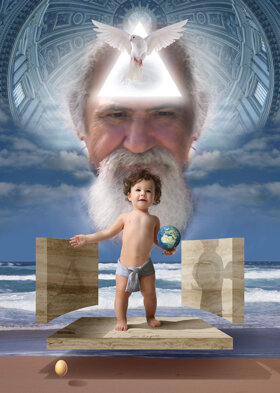
Trinity
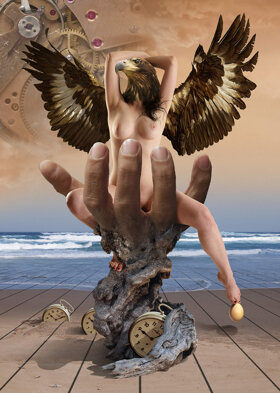
The nest
cm 70 x 50
cm 70 x 50
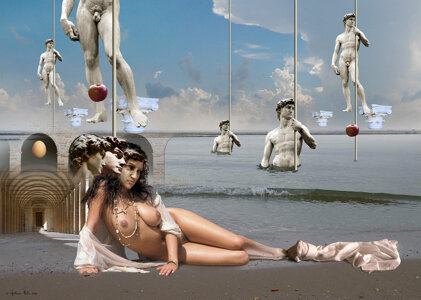
Dominant presences
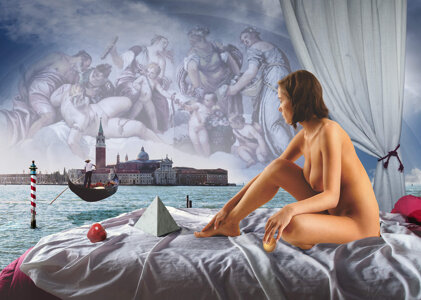
The room of dreams
cm 50 x 70
cm 50 x 70
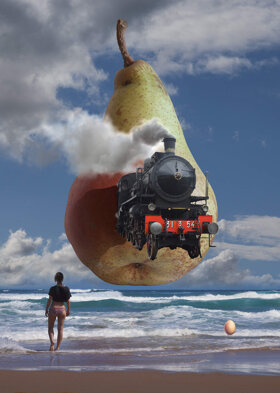
Girl observes the moment when reality fades
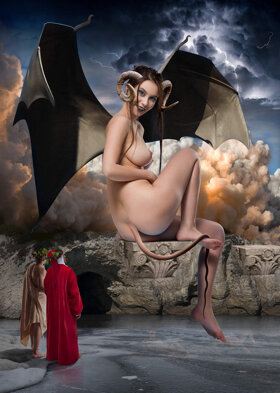
Lucifer 02
cm 70 x 50
cm 70 x 50
About his Art - Biography and Curriculum
Born in 1954 in Colli del Tronto (AP).
He attended the Mosaic School in Ravenna and graduated as a Mosaic Restorer. He was part of the workshop "Il Mosaico," collaborating in the creation of works by the Swiss artist Hans Herni and the Russian André Mikhailovich Lanskoy. He participated in the restoration of the floor mosaics of the archaeological parks of the Basilica of San Leucio (former Temple of Minerva) in Canosa di Puglia (BA) and the Basilica of Santa Maria di Siponto - Manfredonia (FG).
In 1976, his first solo exhibition, in 1984 he exhibited in a group show by invitation of Maestro Remo Brindisi at his House Museum in Lido di Spina (FE).
Since 2008 he has been working on surrealist photographic elaborations, in 2015 a solo exhibition entitled “METAMORFISMO” The truth of imagination and the dictatorship of reality, in the halls of the Palazzo dei Capitani in Ascoli Piceno followed in 2017 at the Barbella Museum in Chieti.
Among the many solo exhibitions and participations in group shows, the most significant in recent years have been those at the Giubbe Rosse Literary Café in Florence, at Palazzo Zenobio as part of the 58th Venice Biennale, at the Venice Film Festival, at the Ugo Guidi Museum in Forte dei Marmi, at the Centro de Arte Canario in Fuerteventura (Canary Islands), at the Lx Factory Cultural Center in Lisbon, at Forte Malatesta in Ascoli Piceno, at the Milanese Gallery, and in traveling group exhibitions in tribute to the 700th anniversary of Dante Alighieri's death.
Winner in 1985 of the “Città di Comacchio” plein air painting prize, in 2004 the “Premio Giulio Cantalamessa” painting competition, awarded in 2015 the “Giusto dell’Arte” Prize for artistic merit by the Accademia Culturale Picena, in 2018 recognition for merit for “Cultures compared: Italy pays tribute to Egypt” by the Arab Embassy of Egypt in Rome, second prize “Kalos 2020” International Art Prize in Forte dei Marmi.
Some works were published in 1986 in the Journal of Education and Psychophysiological Integration “L’Età dell’Uomo” published by C.R.S. D.E.P. of Ferrara.
Co-founder in 1995 of the “A. Fogar 95” Association in Colli del Tronto and in 2009 of the Photographic Arts Association “Punti di Vista” in Spinetoli, where he teaches photography courses on Composition and Framing.
In 2012 he was President of the jury at the photography competition organized by the Province of Ascoli Piceno “Moments from the Festival of the Apennines”.
Currently, he is present on the web on Facebook and Instagram with: ITALO PULCINI and ITALO PULCINI METAMORFISMO.
SOLO EXHIBITIONS
1976 Lido di Spina (FE) - Painting solo exhibition - Hotel Diana
1977 Bologna - Solo painting exhibition - Exhibition hall Antonian Convent
1978 Comacchio (FE) - Solo painting exhibition - Private exhibition space
1980 Comacchio (FE) - Solo painting exhibition - Private exhibition space
1981 Ferrara - Solo painting exhibition - Diamante Gallery
1982 Comacchio (FE) - Solo painting exhibition - Private exhibition space
1991 Ripatransone (AP) - Solo painting exhibition “Tempered Surrealism” - Sala A. Condivi
2015 Ascoli Piceno - Solo exhibition of photographic works “Metamorphism” - Palazzo dei Capitani
2015 Castorano (AP) - Solo exhibition of photographic works “Metamorphism” Event “Borgo Aperto”
2017 Chieti - Solo exhibition of photographic elaborations “Metamorphism” - Costantino Museum Barbella
2021 Colli del Tronto (AP) - Solo exhibition of photographic works “Metamorphism” - Villa Fanini
GROUP EXHIBITIONS - REVIEWS - COMPETITIONS
1974 Ravenna - Contemporary Mosaic Group Exhibition - Dante Cloisters
1975 Santhià (VC) - XII Exhibition - National Competition of Contemporary Painting
1976 Bologna - Group exhibition of contemporary painters - Caliban’s Club
1981 Lido degli Estensi (FE) - Group exhibition of contemporary painters - Galleria L’Ariete
1983 Comacchio (FE) - Group exhibition of painting, sculpture and graphics - Museo Mariano
1984 Ferrara - Painting and Sculpture Exhibition - Alba Gallery
1984 Lido di Spina (FE) - Group exhibition - Alternative Museum “Remo Brindisi”
1985 Comacchio (FE) - “City of Comacchio” Open-Air Painting Award
1985 Codigoro (FE) - Contemporary painting award - Bishop's Palace
1986 Comacchio (FE) - Collective of Comacchio artists - Edgardo Fogli Palace
1986 Venice - Painting competition “Venice-Paris, two cities one carnival”
1989 Colli del Tronto (AP) - Collective exhibition of painting, sculpture and graphics - Conference Hall - Park
of Peace
1989 Ascoli Piceno - Group exhibition of Marche painters - Sala dei Mercatori
1991 Ripatransone (AP) - Group exhibition of Marche artists - “Art, a message of solidarity”
1992 Monteprandone (AP) – Contemporary Art Exhibition “Motu Proprio” Abstraction and/or Figuration
1992 San Benedetto del Tronto (AP) - Collective painting exhibition “Eidos” - Sala Marinai d’Italia
1992 Ascoli Piceno - Painting exhibition with donation of work for Auction pro Amnesty International
1992 Ascoli Piceno - Painting exhibition with donation of work for Auction pro Caritas
Diocesan
1993 Laives-Leifers (BZ) - International Figurative Arts Competition “City of Laives”
1993 Ascoli Piceno - Painting exhibition “The Resistance in the Piceno” - Palazzo dei Capitani
1995 Ascoli Piceno - Figurative Art Exhibition “Artist’s Profile” - Multimedia Center The Malaspina Sphinx - Malaspina Palace
1995 Pescara - Figurative Art Exhibition “Artist’s Profile” - Defra Art Gallery
1995 Rome - Figurative Art Exhibition “Artist’s Profile” - Hall of the Pio Sodalizio dei Piceni
1995 Sassoferrato (AN) - XLVI Exhibition of painting, sculpture, graphics and artist's book
1996 Ascoli Piceno - Invitational painting and sculpture exhibition “Festamaggio” - Cloister major of the Temple of St. Francis
1996 Ascoli Piceno - Art and Psychology Review “La Stendechina” - Tribute to Ernesto Ercolani (1909-1974) - Multimedia Center La Sfinge Malaspina - Palazzo Malaspina
1999 Colli del Tronto (AP) - Collective photography exhibition - Primary School Gym
2001 Colli del Tronto (AP) - Group photography exhibition - Primary School Gym
2002 Colli del Tronto (AP) - Collective photography exhibition - Private exhibition space
2002 Colli del Tronto (AP) - Photography competition exhibition “Points of View” by vote popular
2004 Colli del Tronto (AP) - Group photography exhibition - Private exhibition space
2004 Colli del Tronto (AP) - Painting competition “Giulio Cantalamessa Prize” - Former Convent
2005 Grottazzolina (FM) - Photography contest “People and Places” - Novelli Theater
2007 Venice - “Arte Laguna International Prize” Competition - Photography section
2009 Colli del Tronto (AP) - Photography group exhibition - Sala Pub Parsifal
2010 Pagliare del Tronto (AP) - Photographic exhibition in competition “The Gift” - Spinetoli Sculpture (XV year) “Alfio Ortenzi“ - Sala B. Gigli
2010 Venice - “Arte Laguna International Prize” Competition - Photography section
2010 Pagliare del Tronto (AP) - Photography group exhibition - Primary School Atrium
2010 Venice - “Arte Laguna International Prize” Competition - Photography section
2010 Spinetoli (AP) - Photography group exhibition - Sala Belvedere
2011 Ascoli Piceno - Photography group exhibition - Piazza Grande C.C. Città delle Stelle
2011 Pagliare del Tronto (AP) - Photographic exhibition in competition - Sculpture symposium - Sala Oasi “La Valle”
2012 Colli del Tronto (AP) - Collective exhibition of photographic images on “The Mothers” within
of the sculpture exhibition by Graziano Gregori “Secret Ablutions”
2015 Castorano (AP) - Photography group exhibition - Event “Borgo Aperto”
2015 Marche Region - Photography contest “100 Times Marche” - Traveling exhibition
2016 Castorano (AP) - Photography group exhibition - Event “Borgo Aperto”
2016 Republic of San Marino - International Symposium of Contemporary Art “Ut pictura poesis”
2016 Lisbon (Portugal) - Art Group Exhibition - “Open Day” event of the Lx Factory Cultural Center with Artes&CO
2016 Tollo (CH) - Group exhibition of Marche painters - Eno-Museo Tollo
2016 Pescara - Group exhibition of Marche painters - Vittoria Colonna Museum of Modern Art
2017 Chieti - Group exhibition of Marche painters - Costantino Barbella Museum
2017 Capestrano (AQ) - Group exhibition of Marche painters - Capestrano Castle
2017 Monteprandone (AP) - Group exhibition “La Sibilla” - Pacetti Center
2017 Varese – IIIrd International Competition “Gran Premio dell’Arte 2017” - PassepARTout Unconventional Gallery - Atahotel Varese
2017 Padua - Art Talent Show - PassepARTout - Unconventional Gallery
Padua Fair
2018 Florence - International Symposium City of Florence - Painting, Sculpture, Photography at curated by IrdiDestinazionearte - Literary Café “Giubbe Rosse”
2018 Rome - Intercultural event in tribute to Egypt and the Arab world with the theme “Cultures in comparison” organized by the Cultural Association Occhio dell’Arte - Cultural Institute Arab Embassy of Egypt
2018 Fuerteventura (Canary Islands) - Group exhibition Kalos “The Colors of the Soul” curated by Irdi Destinazionearte - Centro de Arte Canario - Casa Manè
2018 Civitella del Tronto (TE) - The Fortress of Art - Group exhibition “Looks and visions from the Marche” - Spanish Fortress
2018 Ascoli Piceno – “Premio Marche” Competition Biennial of Contemporary Art
2018 Monteprandone (AP) - Group exhibition “The Faces of the Sky” curated by the Association Alchimie d’Arte - Centro Pacetti
2018 Blankenberge (Belgium) - Group exhibition Kalos “The Colors of the Soul” curated by IrdiDestinazionearte - Atelier Nan Yar
2018 Guardiagrele (CH) - Group exhibition “Looks and visions from the Marche” and “Homage to the Presentosa” - Palazzo dell’Artigianato artistico abruzzese
2018 Ferrara - 5th Festival of the Arts “In Search of Infinity” curated by the Olimpia Morata Cultural Association - Palazzo Sacrati Muzzarelli Crema
2018 Chieti - Group exhibition “200 Artists for Chieti” - International Symposium of Urban Art in the places of the economy - various venues
2019 Ortona (CH) - International Art Exhibition Russia, Bulgaria, Italy “The Sacred. The Mystical. The Spiritual in Art” - Diocesan Library
2019 Venice - Group exhibition "Like earth water and fire..." curated by the Olimpia Morata Cultural Association - Galleria ItinerArte
2019 Ascoli Piceno - Contemporary Art Exhibition “Cecco d’Ascoli: the man and his works, his time and his world” - Forte Malatesta
2019 Venice - Group Exhibition “The State of Art at the Time of the 58th Venice Biennale” - Palazzo Zenobio
2019 Milan - International Group Exhibition “Democracy in Art” - Fabbrica del Vapore
2019 Venice - International Group Exhibition “Humanizing the icon” - 58th Venice Biennale Film Festival - Palazzo Zenobio
2019 Milan (Brera) International Group Exhibition “Figurative Art between Realism and Non- Realism” - Galleria Spazio M’Arte
2019 L’Aquila - Contemporary Art Collective "Kalos 2019 in L’Aquila" curated by IrdiDestinazionearte and Gruppo Marsarte - Teofilo Patini Gallery
2020 Forte dei Marmi (LI) - “Kalos 2020” International Art Prize curated by IrdiDestinazionearte - Museo Ugo Guidi
2020 Luxembourg - International selection “Luxembourg Art Prize 2020” - La Pinacothèque
2020 Rome - Selection for the national painting competition “Dantebus Bazart”
2020 Venice - International group exhibition “Art in Venice in August” - Venice Art Gallery
2020 Monteprandone (AP) - Group exhibition “Art and culture will save us” curated by the Cultural Association Alchimie d’Arte - Centro Pacetti
2020 Venice - Group exhibition “Democracy in Art” - Venice Art Gallery
2020 Milan - Online Group Exhibition - Milanese Gallery
2021 Milan - International Group Exhibition for the 700th anniversary of the death of Dante Alighieri and presentation of the Divine Comedy illustrated by 333 contemporary artists - Rocca Brivio Sforza
2021 Caravaggio (BG) - International Group Exhibition for the 700th Anniversary of Dante Alighieri - San Bernardino Monastic Complex
2021 Milan - International Exhibition of Contemporary Visual Art “Art Resurfaces” Milanese Gallery
2021 Monteprandone (AP) - Group exhibition “Festival Noir Piceno” curated by the Cultural Association Alchimie d’Arte - Centro Pacetti
2021 Venice - International Group Exhibition for the 700th Anniversary of the Death of Dante Alighieri - Venice Art Gallery
2021 Rivisondoli (AQ) - Kalos International Prize 2021 (Art and Literature) - Group Exhibitioncurated by IrdiDestinazionearte - Nativity Museum
2021 Castelnuovo di Porto (RM) - International Group Exhibition for the 700th anniversary of the death of Dante Alighieri - Palazzo Ducale Rocca Colonna
2021 Matera - International Group Exhibition for the 700th Anniversary of the Death of Dante Alighieri - Gallery Sax Art
2021 Genoa - International Group Exhibition for the 700th Anniversary of the Death of Dante Alighieri - Anim Art Gallery
PERFORMANCE - BONUSES
1985 Comacchio (FE) - “City of Comacchio” Open-Air Painting Prize
(First prize)
1995 Ascoli Piceno - “Pulsional Photography” - Performance with image projections and sounds - Multimedia Center La Sfinge Malaspina - Palazzo Malaspina
1999 Colli del Tronto (AP - Photographer for the book “Colli. The color and the light” by Vincenzo De Luca
2002 Colli del Tronto (AP) - Photography contest exhibition “Points of View” by popular vote popular (First prize)
2004 Colli del Tronto (AP) - Painting competition “Giulio Cantalamessa Prize” (First prize)
2007 Colli del Tronto (AP) - Author of the photos for the Catalogue for the Museum of Sericulture “Celsio Ascenzi”
2009 Colli del Tronto (AP) Author of the panels with creation and photographic research of theVillas of Colli del Tronto for “Italia Nostra”, published by the Association for Social Promotion “Ermocolle”
2011 Photographer for the catalogue of the sculpture exhibition “Le Madri” by Graziano Gregori
2015 Colli del Tronto (AP) - “Giusto dell’Arte” Award conferred for artistic merit by the Picena Cultural Academy
2018 Rome - “Cultures compared: Italy pays tribute to Egypt” - Arab Embassy of Egypt (Certificate of Merit)
2020 Forte dei Marmi (LI) - “Kalos 2020” International Art Prize (Second prize)
2021 Rivisondoli (AQ) - Kalos International Prize 2021 (Mention by the Jury)
BIBLIOGRAPHY
1991 Italo Pulcini - Tempered Surrealism, curated by Carlo Melloni
2015 Metamorphism - The truth of imagination and the dictatorship of reality, curated by Vincenzo De Luca
PRESENCES IN COLLECTIVE PUBLICATIONS
1991 Art message of solidarity - Osvaldo Rossi
1992 Eidos - Giovanni Santori
1992 Motu Proprio Abstraction and/or Figuration - Carlo Melloni
1993 The Resistance in the Piceno - Carlo Melloni
1995 Artist Profile - Carlo Melloni and Fiorella Bentivoglio
1996 La Stendechina - Carlo Melloni
2017 Art Paths in Italy 2017 - Massimo Pasqualone - Editrice Rubbettino
2018 Kalos 2018 - The Colors of the Soul - Massimo Pasqualone - Edizioni Sigraf
2019 Cecco d’Ascoli - The man and his works, his time and his world - Piersandra Dragoni and Stefano Papetti
2019 Kalos 2019 in L’Aquila - Massimo Pasqualone - IrdiDestinazionearte - Edizioni Sigraf
2020 Kalos 2020 Dubai - Forte dei Marmi Museum (LI) - Massimo Pasqualone - IrdiDestina- zionearte - Sigraf Editions
2020 Fourth emotional dictionary - Art and poetry in the time of the pandemic - Massimo Pasqualone - Edizioni Sigraf
2021 Divine Comedy - Illustrated by contemporary artists - Giorgio Gregorio Grasso Published by National Institute of Culture
2021 Kalos London 2021 - Massimo Pasqualone – IrdiDestinazionearte - Sigraf Editions
2021 Art Resurfaces - Antonio Castellana and Roseli Crepaldi - Milanese Gallery
2021 International Kalos Award 2021 - Massimo Pasqualone - IrdiDestinazionearte - Sigraf Editions
2022 International Kalos Award 2022 - Massimo Pasqualone - IrdiDestinazionearte - Sigraf Editions
ARTICLES AND QUOTES
Il Resto del Carlino - Il Carlino Ferrara - Il Carlino Ascoli - La Gazzetta di Ascoli Piceno - Il Messaggero - Il Corriere Adriatico - Il Corriere dei Lidi - L’Età dell’uomo (journal of Education and psychophysiological integration) - Harksheider Verlagsgesellschaft MBH (Publishing House - Hamburg) - Il Liofante - Sipario - Metropolitan Web - Eventiabruzzo - Cityrumors - Abruzzo popolare - L’Ancora on Line - Taranto eventi - Arte Mondadori - Puglianews24 - Il Centro - La Nuova Riviera - Puglianews24 - Metropolitan Web - Abruzzolive - Museo d’Arte Contemporanea di Milano - Il Graffio.online
Reviews
Iconic combinations and veiled mysteries
Anything you can imagine is real.
Pablo Picasso
It could be said that over the centuries art has represented reality (and thus itself) by riding the ideal upward line of civilization, recounting the slow and unstoppable evolution of human thought, in the difficult search for a perfectibility that never becomes perfection. This line occasionally presents magnificent leaps forward, and unfortunately also slowdowns. Consider the superb era of perspective during the humanistic period, which revolutionized the way of seeing and representing the world, and also the innovative thinking of absolute geniuses such as Michelangelo (as the seal of the Renaissance period) and Caravaggio (as the initiator of the modern age). Or, conversely, recall the crises that follow exceptional artistic flowerings: take as an example the miracle of the Ravenna mosaics at such a high level of aesthetic purity that in the centuries to come art warns us how difficult it is to keep up that pace, to soar to those heights.
In the nineteenth century, exceptionally, in the artistic field the concept of evolution is replaced by that of revolution, or rather a double revolution. Revolution in the sense that in a short time what would happen through evolution over very long periods occurs. The aforementioned ideal line on which art travels in the second half of that century seems to undergo a trauma, a seismic shock, an identity crisis, from which fortunately art, mainly painting, emerges reinvigorated and not weakened.
The reasons – only for an apparent paradox – are external to painting: first the advent of photography, then the discovery of psychoanalysis. Technique (photography) and science (psychoanalysis), by contaminating painting, work a sort of miracle, forcing artists to depict life not in an academic way, with visual fidelity to reality, but in parallel... the imaginary replaces reality, dreams replace lived experience, what could be replaces what is.
Photography pushes painting off track, psychoanalysis welcomes it into paths of investigation never before explored. The new balance in painting therefore lies in finding a point of contact with photography, which, in terms of faithful reproduction of reality, would not accept comparisons (a photograph is materially produced in less time, with greater definition and at lower costs compared to a painting); but also with psychoanalysis (not by yielding to the discoveries of Sigmund Freud, but by taking inspiration from his studies).
Photography, painting, and psychoanalysis coexist happily in the artist Max Ernst. In some of his works, the dream world reveals a truth that the intellect would keep hidden—places, times, relationships outside the ordinary. One of Ernst's best-known works is The Robing of the Bride, where the image is a dream that becomes a nightmare and is dressed in symbols. Other works of his are collages, with retouched photographs and oil colors, such as La puberté proche…
Ernst is the most faithful representative in art of Surrealism, of the reality suspended between the visible world and the probable one, experienced by the senses and dreams, with the presence in his works of elements (concrete or conceptual) often repeated, like a nightmare or an "imagined" image that returns mechanically. Freedom... woman... the deformation of the body... of all psychic automatisms, the theme of freedom is the dearest to the exponents of Surrealism. Freedom as the central theme of the work, but also as a path of artistic formation; thus wrote André Breton in the Manifesto of Surrealism of 1924, The single word freedom is all that still exalts me. I believe it is able to fuel, indefinitely, the ancient human fanaticism. It undoubtedly responds to my only legitimate aspiration. Among the many misfortunes of which we are heirs, we must recognize that we are left with the greatest freedom of spirit. It is up to us not to make bad use of it. To reduce imagination to slavery, even at the cost of what is summarily called happiness, is to deprive ourselves of that bit of supreme justice that we can find deep within ourselves.
Among Italo Pulcini's photographic elaborations, the one closest in evocation to Max Ernst's investigation is the work Traghettatore: the image invites the viewer to enter a dreamlike dimension, where everything is light (even the colors), except for the one about to enter the work (the viewer): the gondola is suspended and so are the street lamps, even the sea seems to evaporate, blending with the sky, and the woman becomes an angel. Only the viewer is bound to gravity, pushed (almost forced) to walk along a walkway towards nothingness. In summary, an elegant oxymoron is created by combining the overall freedom and the freedom denied to those who enter the work.
The photos of Italo Pulcini present, sometimes latent, sometimes evident, precisely the theme of the oxymoron, that is, the harmonious coexistence of elements that are by nature opposed. The most evident is time (which is expressed in the duality of chronicle, as the flow of events, and eternity, as the definition of an everlasting value); another oxymoron is the egg (life in becoming, what is and what will no longer be); furthermore, oxymoron is the relationship between beach and sea, as a contrast between the finite and the infinite; and the trilogy water / earth / air (that which moves, or is still, or again that which moves but seems still).
In Dottrine the beauty that becomes eternal from fleeting is celebrated. The point of view is from below. A vision opens up to the viewer, who walks along the beach's floor, which, giving credit to the title, indoctrinates. As an integral part of the icon, the viewer gains knowledge of what is before them in an ascending visual path, as often happens in works of art (think, for example, of Masaccio's Trinity, where the viewer understands the true meaning of the work only if they read it progressively from bottom to top, and not as a whole); thus first the books topped by the woman (an allusion to the beauty of culture but also to its genesis, that is, the muse who inspires), then a complex mechanical device (which seems like that of clocks, thus marking time), finally a monumental portal that transforms into a triumphal arch. In summary, literature, deeds, art; it seems to echo what John Ruskin wrote, that the great nations write their autobiography in three books: in the book of their deeds, in the book of their words, in the book of their art, and none of these books can be understood without reading the other two. But of the three, only the last is to be trusted.
In Self-portrait Surrealism becomes Pirandellian, the observer looks at the work but observes himself. In One, No One and One Hundred Thousand, Pirandello writes that the reality I have for you is in the form that you give me; but it is reality for you and not for me; the reality you have for me is in the form that I give you; but it is reality for me and not for you; and for myself I have no other reality except in the form I am able to give myself. And how? By constructing myself, precisely.
What are the true traits of a man, those of facial expressions, transient and ever-changing, or those of feelings, which solidify over time? Is a man what he appears to be or what he feels emotionally?
Thus, true identity shifts towards the heart while the brain is occupied with rational structures (or, worse, superstructures), numbers, geometries, calculations... The thoughtful gaze of the withdrawn artist invites doubt, the search for a point of balance, which Fedor Dostoevsky encapsulated in the phrase all right, we know that two plus two makes four, but how much more beautiful it would be if at least once it made five.
In The Rediscovered Dream the elastic of contrasts is stretched further. The observer recovers their own past by watching the little girl who, lifting a curtain, opens up to another world (would she like to peek into her own future?) from where a little train comes (or towards where it is heading) (a symbol of life as a journey): present and past that continually evoke each other along the timeline. Furthermore, the themes of front / back, above / below, light / dark alternate, and on the curtain the concept of evolution is revealed, the chronicle / nature that becomes history / artifice, in the shell that metamorphoses into a statue (from right to left) and the church that rises above the sea (from bottom to top).
The support of the thumb of the hand in The outrage to life is a quote from Dalí (and other details in Pulcini's photos recall the Spanish artist: Muse witnesses the birth of a new melody evokes Dalí's painting Dream Caused by the Flight of a Bee; Complacent trophy has in the face the idea of Mae West Room; The sacrifice recalls The Ascension of Christ). The work stands out for the particular / universal contrast of the hand in front and the whole body behind, without hands, which becomes a tree. In front, the hand remains as such but is a tree, behind the hand is branched. There is a sculpture, nebulous, in the sky, and as such it could evoke Bernini's Apollo and Daphne by Gian Lorenzo Bernini (even if it is not that sculpture), with a metamorphosis in progress. But in this case the drama is different and becomes blood. It seems that the slope of the floor directs the blood toward the viewer. The verses of the XIII canto of the Inferno come to mind when Dante meets Pier delle Vigne:
Then I stretched my hand a little forward
and plucked a little branch from a great thorn bush;
and its trunk cried out: "Why do you tear me?"
Then, made dark with blood,
he began again to speak: “Why do you tear me?
Do you not have any spirit of pity?”
We were men, and now we are made into stumps:
surely your hand ought to be more merciful,
even if we had been the souls of serpents.
The title of the photo Summary Judgment truly represents a threshold of the text, because rather than offering a clue for understanding the image, it raises doubts, which for those called to judge should be a necessary initiatory path. If there is a judge, there is a culprit... is the guilt with the one who has fallen to the ground? So, is the culprit the weakest? The one who passes judgment, seated on a throne, points with the right hand and with the left reveals three fingers; three like the degrees of judgment, or rather a request to omnipotence (Father, Son, Holy Spirit)?
In painting, a similar spatial arrangement, but above all the expectation of a judgment in a tribunal of truth, can be found in Raphael's Disputation of the Sacrament, in the Stanza della Segnatura in the Vatican.
A church dome that becomes sky is, in the photographic elaboration The Sacrifice, a tribute to the theme of spirituality. The light from the window ideally takes on volume and becomes a human body. The signs of the Passion, the crown of thorns and nails, expand into the space to materialize the martyrdom, and above the observer, like the sword of Damocles, the weight of that human sacrifice is suspended, becoming flesh and blood. The view from below is fundamental, as if one kneeling is asking Christ for mercy; in painting, this device has been used countless times, for example in the Saint Sebastian of Dresden by Antonello da Messina. Suggestive is the presence of two nails, on the right and left, at the center of the composition, with the blood dripping and the tip beyond, on the other side of the sky (that is, of the image), as if to suggest that once the nails are removed, another icon opens up behind this image, perhaps a better reality, born from the sacrifice and the blood shed.
Fertile landscape is both harmony and contrast. Mountain and woman evoke Mother Nature, in an ideal fusion that is easier to admire than to understand; something similar happens in Dalì's painting Portrait of Isabel Styler-Tas (Melancholy), where the profile of a woman is translated on the other side of the work into her own mirror image, made of a rocky, arid, and almost impenetrable nature, alluding to the sharp and determined character of the portrayed woman. In the same way, and by contrast, in Italo Pulcini's photographic elaboration, the roundness of the naked woman's body lying on her side harmonizes with nature in an almost Arcadian image.
But penetrating the laws that govern creation and creature, natura naturans and natura naturata, seems impossible, like deluding oneself into making the marine world (indicated by the boat, whose mast stuck into it paradoxically makes it rise and not sink) and the mountain world (flock and shepherd) coexist.
There are two women in the same photo who could be described as similar by contrast. The title of the work, Prejudice, is justified by the superficial, and therefore mistaken, way of observing them. They would be placed in opposite dimensions: the woman on the seashore, in monastic dress, lives a clear and declared spiritual dimension, at first glance different from that of the naked and bound woman. On closer analysis, however, everything is imbued with spirituality: the sea, the sky, civil and religious architecture. And, above all, human beings: both women have their feet on the ground, even the naked woman who, photographed from above, in the process of image processing seems instead suspended by the ropes. But a hand emerging from the sea restores balance, it stretches out, and as a result the naked woman becomes an arrow in the bow, ready to move away from material dross. Despite an initial prejudice, both live in a sentimental and spiritual dimension. One dressed as a nun, the other stripped of superstructures, both directed upwards.
On a pyramid in precarious balance, a naked woman is sitting as if it were an ordinary chair. Venice (but it could be any other place) serves as the backdrop, in the work Under False Appearances, to a de Chirico-like stage with children coming and going and a woman sitting on the ground, thoughtful in front of a pyramid in a classic position of stability. The metamorphosis and decomposition of the woman can be explained starting from the mask, which is probably moving away from the face, where it was just moments before, where it served as a point of balance (like a dress that covers the nakedness of the body). Every man lies, but give him a mask and he will tell the truth, is a logical paradox by Oscar Wilde: if the mask moves away from the face, it is as if she has nothing more to say, the now naked face causes her physical nudity to lose its features, and being totally undressed, she begins to take on bestial features. The femininity of the foot loses its sensuality (without the stiletto heel) and it too transforms into an animal's hoof.
A similar analysis, with variation, is in Attesa al convegno. The subject is the search for truth: whoever is naked (that is, authentic, not false) observes those who are covered (masked) and not the other way around. At the top, a 'dirty' image materializes, awaiting decoding, that is, the truth of the features (man's face and birds).
Ultimately, the digital image can rightfully be considered an artistic proposal, if it is able to combine technical aspects with a pictorial or sculptural evocation, highlighting (or changing) its message. For example, consider the Japanese artist Koya Abe, who creates fusions of images to produce a completely new icon. In his work The Second Birth of Venus (La seconda nascita di Venere), from 2000, he inserts the nude bodies from The Birth of Venus (1863) by Alexandre Cabanel into the space imagined by Katsushika Hokusai in the Japanese print A Fisherman at Kajikazawa (1831), in an interesting harmony while at the same time presenting a major cultural provocation.
In the same way, in Italo Pulcini's photographic works on the theme of Surrealism, themes are developed and repeated in ever different ways: nude women, the egg, the sea, clouds, suspended architectures... Each time, in various combinations of icons, the artist digs into some point of the unconscious, searching for those surprises that the psyche, not totally governed by the intellect, reserves for man, returning them to him from time to time as confirmation of his complexity of thought and feeling.
Vincenzo De Luca