
ALESSIO BANDINI - Italy
Contacts: alessio.bandini@gmail.com Website: http://www.alessiobandini.eu
Cell. + 39 348 7643668
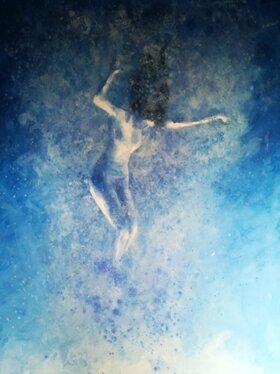
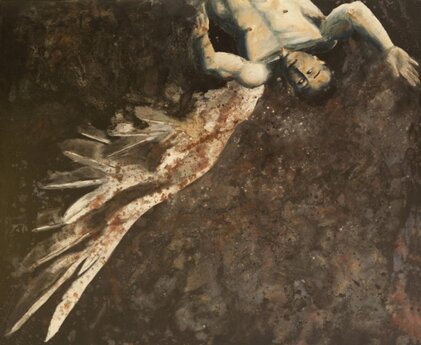
Fallen Angel
Brizo
oil on canvas cm 100 x 120
oil on canvas cm 100 x 80
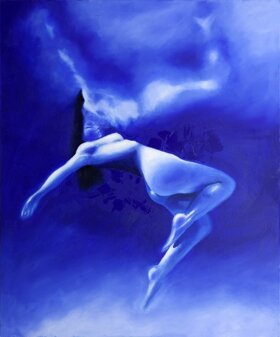
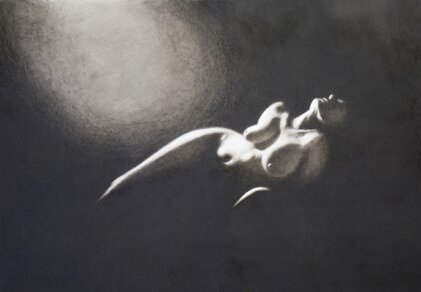
Calliroe
Doride
black powder on hammered paper 35x50 cm
oil on canvas cm 120 x 100
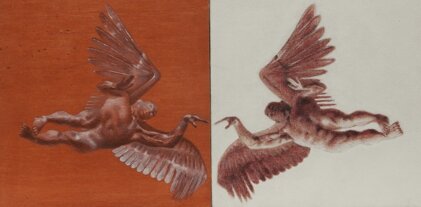
Damiel & Cassiel
Fire and Ice
diptych Bic pen red and black on wood and on canvas.
oil on smoothed lime cm 80 x 80
His Biography and Curriculum
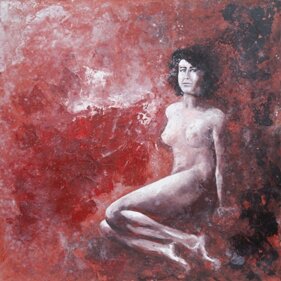
ALESSIO BANDINI was born in Florence, where he lives and works. He has always been passionate about art, in whatever expressive form it presents itself, especially painting and cinema. A self-taught painter and draftsman, he began expressing himself since his school days with portraits and drawings in pencil and charcoal. At the beginning of the nineties, he began to explore “en plein air” painting, painting oil views of the Tuscan countryside. He trained at the Rossotiziano Art School, run by Maestro Tiziano Bonanni, where he conducted in-depth research on techniques and materials. The central theme of his work is the human figure, analyzed and seen from unusual angles, expressed in nudes that surrender to waves that welcome and rest the body and mind, or in fallen angels, suspended between a Heaven that condemns them and an Earth that does not want them. His main sources of inspiration are Classical Mythology and the works of William Blake.
CURRICULUM
Solo exhibitions March 2017, "Unworldliness", Donatello Group, Florence.
April 2015, "Onirica", Castello dell'Acciaiolo, Florence.
Other exhibitions
July 2018, "Satura International Contest 2018", Satura Art Gallery, Genoa. Awarded Artist.
June 2018, "Biennale del Tirreno 2018", ArtetrA and Prince Group, Cava de' Tirreni, Salerno.
June 2018, "Donatello Group - XLVIII Exhibition in the Square", Donatello Group, Florence.
March 2018, "ArtBox.Projects New York 1.0", ArtBox.Projects, Stricoff Gallery, New York, USA.
June 2017, "Arte Salerno 2017", ArteTra, Salerno. Awarded Artist.
June 2017, "Donatello Group - XLVII Exhibition in the Square", Donatello Group, Florence.
January 2017, "ICLAB - Contemporary 2017", ICLAB, Florence.
December 2016, "ArtBox.Projects Miami 1.0", ArtBox.Projects, Spectrum-Miami, Miami, USA.
November 2016, "Contemporary Art Exhibition", Le Dame Art Gallery, London, UK.
October 2016, "Scandicci Arte 2016", Toscana Cultura, Florence.
October 2016, "A Painter before the Concert", Vito Frazzi Art Center, Florence.
September 2016, "SaturARTE 2016", Satura Art Gallery, Genoa. Awarded Artist.
March 2016, "Artist's Profiles", Satura Art Gallery, Genoa. March 2016, "Woman", MIIT Museum, Turin.
February 2016, "I painted it for...", Fondazione Novara Sviluppo - Palazzo Renzo Piano, Novara.
January-February 2016, "PremioArt Rome", Literary Café, Rome.
January 2016, "15th Novara Prize", Novara Sviluppo Foundation - Renzo Piano Palace, Novara,
Awarded Artist. December 2015, "Images in the Mind", Antico Spedale di Sant'Antonio, Florence.
September 2015, "SaturARTE 2015", Satura Art Gallery, Genoa. Awarded Artist.
May - June 2015, "Photissima Art Fair 2015", Venice, 56th Art Biennale.
November 2014, "14th Novara Prize", Novara Sviluppo Foundation - Renzo Piano Palace, Novara.
October 2014, "ContemporaneaMENTE 2014", Satura Art Gallery, Genoa.
September 2014, "SaturARTE 2014", Satura Art Gallery, Genoa. Awarded Artist.
September 2014, "Novara ART PRIZE 2014 Winners Exhibition", La Riseria Cultural Center, Novara.
May 2014, "Novara ART PRIZE 2014", La Riseria Cultural Center, Novara. Awarded Artist.
Publications and reviews
March 2018, ArtBook "Full Art Immersion", ArteTra
December 2016, "Artists of Scandicci 2016", Toscana Cultura and Masso delle Fate Edizioni.
March 2016, "Artist's Profiles", Satura Art Gallery.
April 2015, Presentation of the solo exhibition "Onirica" by Carlo Lapucci, writer and essayist.
December 2014, Satura N27 - 3rd 2014, Quarterly of Art, Literature and Entertainment, "Alessio Bandini - In the Sign of the Self", by Elena Colombo, Publisher "SATURA cultural association".
About his Art
Alessio Bandini uses a mosaic of quotations, ranging from cinema to mystical culture. The artist guides us towards an ancient past in which signs were the first evidence of the existence of an independent SELF. All these inspirations are translated with a mix of various techniques and different styles that derive from an analytical point of view. Each of us is defined by a difference that shows itself when we accept our complex identity. We discover Others in the face of our awareness, as in the floral dances of the Art Nouveau period, but with a touch of primitivism. The narrative discourse moves from a collective level to a very intimate one at this stage, the subject does not interact with a real landscape, but swims in an amniotic atmosphere (perhaps a connection with the environment will be the next step). We are faced with shapes cut into a "Negative Space," a vacuum that generates the Otherness of an ideal twin. Therefore, in these works the hues give a photographic black and white effect. Using a delicate but intense range of lights and shadows, the artist suggests a series of paradigms and a summa of human feelings emerges, as in the case of Larsson's "Millennium Trilogy" in literature. Even when the polyphony seems to come together in a Unity, the focus is on the sinuosity of the gesture and the graphic value of the movement. Spirituality is found in inorganic beings but also in ordinary people, whose behaviors condense both poetry and the desire for social revenge. In a search that recalls Milton's poems, we find humble voices and a sharing that reaches Uniqueness. It is an approach that recalls a realistic, almost hysterical declaration that brings us to the paintings of Ben Shahn and reworks popular icons to stir our consciences. In any case, the artist can see how anatomy can become abstract punctuation on the surface, creating a siren-like melody and establishing a new introspective mythology.
Elena Colombo
The Critique
Alessio Bandini, Onirica, 2015
A spontaneous attention has always accompanied Alessio Bandini towards various artistic forms, favoring those of image, painting, and sculpture with a marked sensitivity towards cinema and related expressions.
We can consider this period of latency as a remote, yet active, preparation for the decision to devote himself to painting, initially in an extemporaneous form, then with method and study.
The long prior reflection explains the results achieved in a short period of time with recognition and approval from the very first exhibitions.
From the work he presents here, one can identify a line of what, in a style that is becoming increasingly his own and defined, Bandini has perceived of our time in a synthesis that is as essential as it is fertile with further developments capable of arousing vital emotions.
The reference figure that stands out is that of Blake in the aspect of his modernity: we refer to bodies in the glory of movement, soaring out of gravity, in absolute freedom, the condition of ancient deities, outside the prison of the body. The human form, stripped of its gravity, assumes an ideal beauty of another dimension, which it does not have when matter pushes it to the ground.
The suggestion may barely touch on space flight, but immediately moves to winged figures that recall the angel, creating a two-faced vision of strength that surpasses the human and natural laws, evoking the cosmic drama, the self-exaltation that drives both rebellious angels and Icarus to feel themselves absolute entities, then plunging into inevitable ruin, which is also a source of beauty and mystery.
This seems to be the paradigm, I believe unconscious, with which in his work Bandini captures the drama of being in this time, sensing the overwhelming drive toward unconditional freedom, promised by the fabulous achievements of our era, expressed by the magic of speed, of movement in flight, with the total display of beauty. At the same time, he senses the risk and horror of ruin and the abyss.
Of these two conditions, the mythical connecting link is Icarus, that is, what is inherent in human nature, the boldness generated by false security and thus by the violation and breaking of limits.
This vision, dual and unitary, governs in painting the perception of contemporary reality in its main manifestations and everything is aesthetically translated into a fascinating flight of angelic human butterflies, already almost outside of time and space.
Perhaps the same could be said when faced with other documents of subjects in which matter appears as an apparent motionless abyss to be navigated. It will be, and we wish it for Bandini, another adventure in the discovery of another fragment of the fantastic truth of the Cosmos; it will be for us a journey into the work of a painter still largely to be discovered.
Carlo Lapucci