
EMMA PETRUZZELLI - Inghilterra
Contatti: ejphoto60@gmail.com
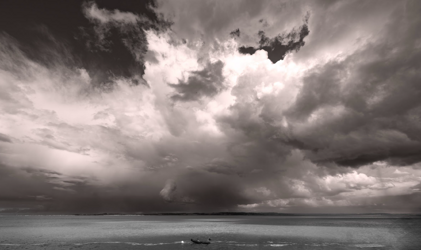
Cloudscapes, Dee Estuary
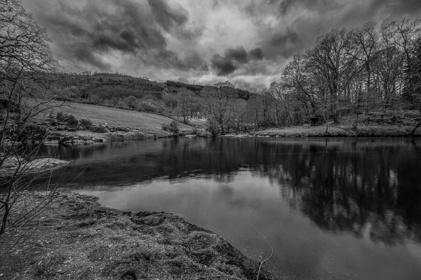
Fairy Glen, North Wales
stampato formato cm 29,7 x 42
stampato formato cm 29,7 x 42
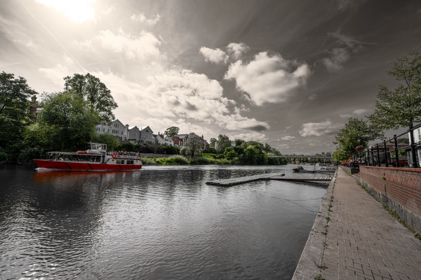
River Dee, Chester
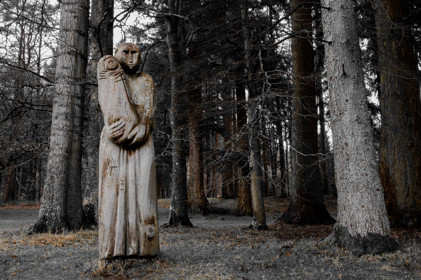
Figures, Lake Vyrnwy
stampato formato cm 29,7 x 42
stampato formato cm 29,7 x 42
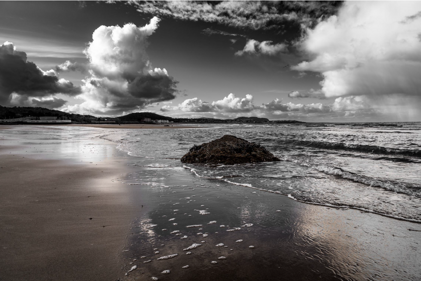
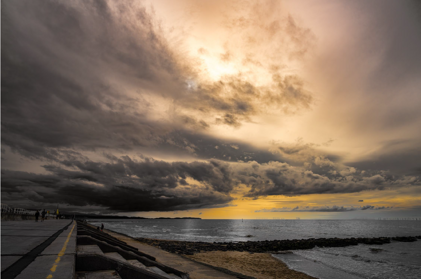
Prestatyn, North Wales
Developing showers, Colwyn Bay, North Wales
stampato formato cm 29,7 x 42
stampato formato cm 29,7 x 42
Sulla sua Arte
https://www.deeside.com/images-of-north-wales-landscapes-by-holywell-student-selected-for-the-world-
Article dated 19th September 2023 Images of North Wales’ landscapes by a University of Chester graduate have been brought to international attention after being selected for the “world expo” of photography in China. Inspired by myths and legends, the photographs by Emma Petruzzelli were showcased at the Dali International Photography Exhibition (DIPE) in Yunnan Province. Emma, 62, from Holywell, has recently completed a Bachelor of Arts in Photography at the University, achieving a first, and the images are from her degree show project. They featured at the tenth DIPE in China as part of a display of work from seven of the best recent Photography graduates in the UK, relating to the DIPE theme of ‘living elsewhere’. Emma’s images were chosen by curator and juror, Andy Golding, who is also an academic working with universities and groups across the world, and a trustee of the Royal Photographic Society. Emma said: “I was very proud and excited to have been selected and that my degree show images were available to be seen by a wider and new audience.”00:20 / 02:14 The exhibition ran from the end of August to the beginning of September, offering a cultural exchange between photographers in China and the UK. It is described by organisers as “one of the world’s most influential cultural and artistic events” and “the world expo in the photography industry”. Emma has also recently been awarded the title of Associate of the Royal Photographic Society (ARPS). She explained that the degree project grew from the writings of Alan Garner, George RR Martin, and Stephen Donaldson, and blossomed from the landscapes of Alderley Edge, Cheshire; Whitby, North Yorkshire, and the Isle of Skye, Scotland, before leading to Snowdonia, North Wales. Describing more on the inspiration behind the images, she said: “Across the British Isles, myths and legends adorn the landscape. Born in the mists of time, many of which are inspired by the unique personalities prevalent within the land. “My images try to capture the unique mood that binds the person occupying the land into images that define it.” They picture the seasons, night and day and “mist, fog, sunshine, of tempest and driving rain, spooky woods, lakes of reflection, and mountains that inspire awe”. Andy Golding said: “Emma’s wonderful photography featured in the most prestigious and extensive show I have been professionally involved in, with 900 exhibitions grouped in 23 locations around the ancient city of Dali. Her compelling, mystical interpretations of the land provided an intense visual and conceptual dimension to the group show. To discover that Emma had just been awarded an Associateship of the Royal Photographic Society, amongst her many impressive achievements this year, added to my sense of the perfect appropriateness of her selection.” Dr Tim Daly, Senior Lecturer in Photography at the University of Chester added: “It has been an incredible year for Emma, and we couldn’t be more proud that her work has been selected for the Dali International Photography Exhibition, as well as see her achieve a first-class degree, and be awarded the title of Associate of the Royal Photographic Society.” Reflecting on studying and graduating in her 60s, Emma said: “To be honest, I was nervous about starting University so late in life, but at the same time I was really looking forward to studying Photography. I also used my life experiences to help me and loved every minute of it. It was a challenge, one which I relished, as well as receiving feedback on my work from my peers. I also learned a lot from the course, the sessions, and observation of the work of the other students.”
https://journals.sagepub.com/doi/full/10.1177/14744740241298971
Retracing Footsteps: An exhibition of landscape, text and image First published online December 13, 2024 Abstract This article reflects on an interdisciplinary research project between a cultural geographer and practising artists in documenting the changing landscape of the mountain Yr Wyddfa (Snowdon), Wales. The project draws on archival materials in the form of 19th-century visitors’ books housed in summit ‘hotel’ huts. The visitor books provide a point of departure for research which references the historic insights of the varying tourist encounters of the mountain landscape. By physically retracing the footsteps of 19th-century tourists, the team employed image-making practices to (re)imagine how the mountain is experienced today. This led to a curated exhibition that juxtaposed 19c. visitor book extracts and photographs to communicate the historical and contemporary social-spatial and environmental changes and tensions within the landscape. This paper critically reflects on the retrieval, selection and exhibition of text and image and argues how this process offers new geographical interpretations and forms of dissemination of past and present understandings of human encounters with landscapes. Introduction Standing 1,085 m above sea level, Yr Wyddfa (Snowdon) is the highest mountain in Wales.1 Located in Eryri (Snowdonia) National Park, the mountain attracts over 600,000 tourists annually who ascend via the six main tourist paths or the Rheilffordd yr Wyddfa (Snowdon Mountain Railway), alighting at the summit centre Hafod Eryri. The pressures this footfall puts on the mountain are welldocumented, with longstanding concerns over increasing visitor numbers, environmental degradation, and socio-economic issues impacting local communities, which continue to threaten the sustainable future of the mountain. However, the desire to reach the summit is not a new phenomenon. The first recorded ascent by the botanist Thomas Johnson in 1639 marks a prolonged historical engagement with the mountain. The origin of this project draws on Bos’ ongoing research into historical accounts of ascents of Yr Wyddfa recorded in visitor books housed in summit huts between 1845 and 1889. These books provide a fascinating insight into everyday Victorian tourist encounters with the mountain, the local people, and the surrounding landscape of North Wales. Counter to the singular narratives evident in the Welsh tour literature of the time,2 visitor books offer an alternative vernacular account of the material and symbolic engagements with past lived experiences of the landscape. They parallel the history of the sublime encounter in the context of the growing commercialisation and commodification of the summit and the embodied experience of ascending the mountain today. Our project adopted an interdisciplinary approach, acknowledging recent calls for cultural-historical geographers to embrace creative and arts-based methods in reimagining landscapes that ‘trouble and subvert the past and presents of landscape’.3 As part of the project, Quayle deployed a research-based art photography approach and curatorial practice indebted to the artist walking practices of Robert Smithson, Richard Long and Hamish Fulton. This shared interest in documenting and conveying a contemporary reading of the sublime worked at the intersection of visual art and human geography. By combining historical texts with image-making (photography), we extend geographers’ creative work with archival materials to offer new cultural and aesthetic responses to landscape. This article critically reflects on the process of juxtaposing photographs and archival text, culminating in a public exhibition conceived and curated by Daniel Bos (a cultural geographer) and artist Cian Quayle. The pair were joined by two photography students, which led to different creative responses to the changing landscape of the mountain. Collaboration and context In 2023, Quayle and Bos received ‘Breaking Boundaries’ funding from the University of Chester to undertake an interdisciplinary project involving student participation. By adopting a ‘students-as-partners’ approach,4BA Photography students (now graduates) Emma Petruzzelli and Jane Evans contributed to the research by incorporating their photographic perspectives in (re)imaging and (re)presenting the landscape. In May 2023, we organised a workshop in which group members engaged in a study of the visitor books to identify emergent themes that would inform our subsequent fieldwork activities. Between May and July 2023, we undertook four full-day visits to Yr Wyddfa. The routes for the visits were determined in advance, drawing on the group’s research of the visitor book extracts. During our visits, we noted significant sites and locations en route, the changing weather conditions, and the embodied experience of making the ascent, which echoed the historic experiences recorded in the visitor books. After each field visit, the group met to discuss and reflect upon their walking experience and how this was documented in our photographs and field notes. These discussions fed into the collaborative design and curation of an exhibition in the Castlefield Gallery New Art Spaces, Chester, December 2023, which presented past and present encounters with Yr Wyddfa through carefully selected photographs and visitor book extracts. Fieldwork and practice The 19c. visitor books housed at the summit of Yr Wyddfa are reminiscent of the ‘bothy book’ found in simple shelters in rural Scotland. For Rachel Hunt, such books are important historical, material artefacts which offer insights into the past and present practices of dwelling in the landscape and ‘the lifeworld of those who spend time in and around these buildings’.5 Up to this point, seven visitor books dating from 1845 to 1889 have been studied in their documentation of visitors’ comments upon reaching the summit. The visitor books vary from 250 to 450 pages, and each page contains entries which vary in style, form and length. Whilst the most common entries involve the recording of names, addresses of individuals, and date of ascent, other extracts provided more fulsome accounts detailing their experiences through prose, poetry, sketches and humorous commentaries (see Figure 1). For our project, visitor book entries were electronically transcribed, documenting individual names of visitors, origin locations, dates and the comments made. We aimed to be as accurate as possible to the original entries, considering the challenges presented with the legibility and worn condition of the books. The transcribed entries were then organised in a database, which allowed us to identify emerging themes and areas of interest that informed the field trips.