
MENELAO KOURKOUVELAS - Grecia
contatti: m.koyrk@gmail.com
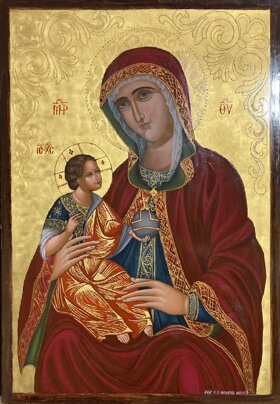
Mother of consolation.
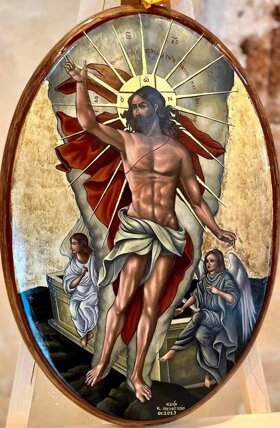
Resurrection of Jesus
traditional Byzantine egg tempering technique. 22K gold leaves 70 x 50 cm
traditional Byzantine techn. of egg tempering. 22K gold leaves as well as imitation gold 60 x 40
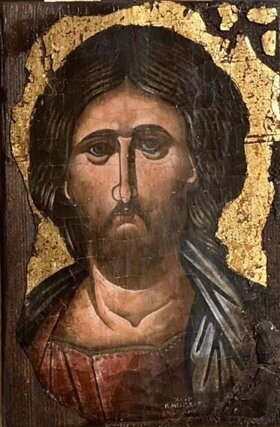
Aged image of Christ
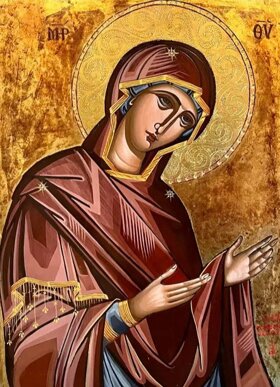
Blessed Virgin Mary
traditional Byzantine technique of egg tempering. 22K gold leaves 22 x 15 cm
traditional Byzantine technique of egg tempering. imitation gold leaf 40 x 30
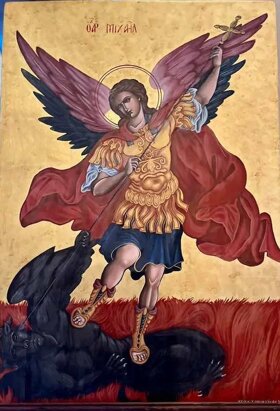
Archangel Michael kills the fallen Angel
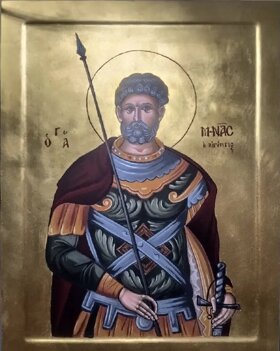
Agios Minas (Military Saint)
traditional Byzantine technique of egg tempering. 22K gold leaves 66 x 46 cm
traditional Byzantine technique of egg tempering. 22K gold leaves. 60 x 50 cm
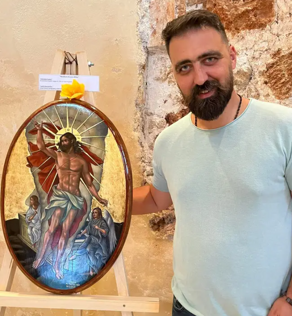
Sulla sua Arte
Menelaos Kourkouvelas was born in Larissa, Thessaly, Greece in 1982.
He comes from the village of Kokkina Perivleptou in Thessaly and lived in Volos until he came of age.
In 2000 he was admitted in the Naval Academy through the Panhellenic Examinations process.
He moved to Athens for his studies at the Academy and the performance of his official duties.
Since 2002 he has been serving in the warships of the Hellenic Navy. In 2013 he was transferred to the Naval Station of Crete in Souda, where he has been serving up to now..
In Chania, he came into contact with the Cretan, the Venetian and the Ionian schools of iconography and attended classes in the workshop of the painter-hagiographer Fotini Mavromati.
The highlight of this course was his participation in the exhibition of Byzantine visual art "Art Light" held in the Venetian church of Agios Roccos in the area of Splantzia Chania. His participation in the exhibition received positive comments and was also mentioned by the local press of Magnesia, his homeland.
His hagiographic work is characterized by respect and reverence. He uses traditional materials bequeathed by the masters of the Cretan school of iconography. He works in art, adopting the old standards of the Cretan hagiographers with precision and fidelity, always following the dictates of the Church's tradition.
According to the artist, dealing with the sacred art of hagiography is not a simple process that represents something earthly and everyday.
The art of hagiography must be practiced with reverence and deep spirituality, observing the rules and walking into the steps of the great masters of this sacred art
Finally yet importantly, various works of the artist adorn private collections in Greece, Holland and Austria.